


Finding Balance in Everyday Life Through the Principles of Yin and Yang
- lukejames2202
- Feb 25
- 4 min read
The idea of balance often feels elusive in our fast-moving lives. We juggle work, family, health, and personal growth, sometimes tipping too far in one direction and feeling out of sync. The ancient Chinese philosophy of Yin and Yang offers a timeless framework to understand and restore balance. This post explores the core principles of Yin and Yang and shows how applying them can bring harmony to daily life.
Understanding Yin and Yang
Yin and Yang represent two opposite but complementary forces found in everything around us. Rather than being strictly good or bad, these forces exist in a dynamic relationship that creates balance and harmony.
Yin is often associated with qualities like darkness, passivity, cold, softness, and inward energy.
Yang relates to light, activity, heat, hardness, and outward energy.
The key is that Yin and Yang are not static or separate. They flow into each other, and one cannot exist without the other. For example, day (Yang) turns into night (Yin), and rest (Yin) leads to activity (Yang). This interplay keeps the natural world in balance.
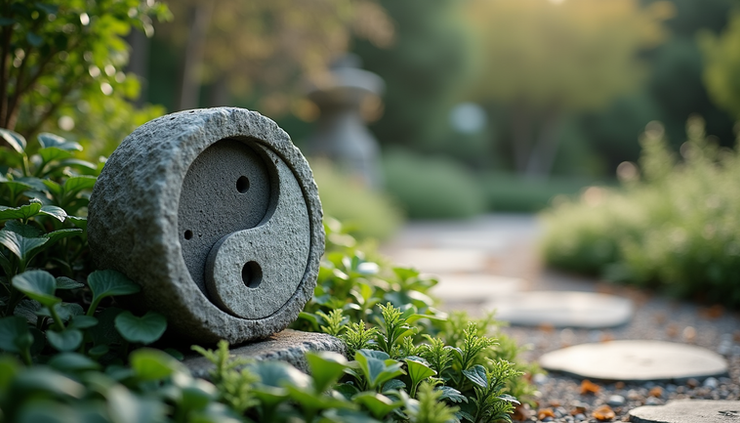
The symbol of Yin and Yang—a circle divided into black and white swirls with a dot of the opposite color in each half—illustrates this idea perfectly. It shows that within Yin there is a seed of Yang, and within Yang, a seed of Yin.
Principles of Yin and Yang
1. Duality
The concept of Yin and Yang is based on the idea that everything in the universe consists of two opposing but complementary forces. Yin represents qualities such as darkness, passivity, and receptivity, while Yang embodies light, activity, and assertiveness.
2. Interdependence
Yin and Yang are interdependent; one cannot exist without the other. For example, there can be no light (Yang) without darkness (Yin), and vice versa. This principle emphasizes the balance and harmony between the two forces.
3. Transformation
Yin and Yang are constantly changing and transforming into one another. This dynamic flow signifies that one state can evolve into the other, illustrating the cyclical nature of life and the universe.
4. Balance
The balance between Yin and Yang is essential for harmony. An excess of one can lead to disharmony, while a balance fosters well-being and stability. This principle is often applied in various aspects of life, including health, relationships, and the environment.
5. Relativity
Yin and Yang are relative concepts; what is considered Yin in one context may be Yang in another. This relativity highlights the importance of perspective and context in understanding the nature of things.
6. Unity
Ultimately, Yin and Yang represent a unified whole. They are not just opposing forces but rather two sides of the same coin, illustrating the interconnectedness and unity of all things in the universe.
These principles provide a framework for understanding balance and harmony in various aspects of life and nature.
How Yin and Yang Shape Our Lives
The philosophy of Yin and Yang goes beyond nature and can guide how we live. It encourages us to seek balance in all areas, recognizing that extremes lead to imbalance and stress.
Balancing Work and Rest
One of the most common struggles is managing work and rest. Too much work without rest leads to burnout, while too much rest without activity can cause stagnation.
Yin (Rest): Sleep, relaxation, meditation, and downtime help the body and mind recover.
Yang (Work): Focused effort, physical activity, and social interaction drive progress and growth.
By consciously alternating between these states, we maintain energy and productivity. For example, taking short breaks during work hours or setting clear boundaries for work time and personal time supports this balance.
Fostering Harmony in Relationships
Relationships thrive when there is a balance of giving and receiving, speaking and listening, independence and togetherness.
Yin qualities in relationships include empathy, patience, and nurturing.
Yang qualities involve assertiveness, initiative, and clear communication.
When one partner dominates with Yang energy, the relationship can feel overwhelming or aggressive. If Yin dominates, it might become passive or disconnected. Recognizing these energies helps couples and friends adjust their behavior to create mutual respect and understanding.
Managing Emotions Through Yin and Yang
Emotions also reflect Yin and Yang dynamics. Calmness and reflection (Yin) balance excitement and action (Yang). When emotions swing too far in one direction, such as excessive anger or withdrawal, it disrupts mental well-being.
Practices like mindfulness, journaling, or physical exercise can help restore emotional balance by engaging both Yin and Yang aspects.
Practical Tips to Apply Yin and Yang Daily
Here are some actionable ways to bring Yin and Yang into your everyday routine:
Create a daily rhythm: Alternate periods of focused work (Yang) with breaks or quiet time (Yin).
Design your environment: Use lighting and colors to balance energy. Soft lighting and cool colors promote Yin, while bright lights and warm colors encourage Yang.
Eat balanced meals: Include foods that represent Yin (cooling, moist) and Yang (warming, dry) qualities to support physical health.
Exercise mindfully: Combine active workouts like running (Yang) with calming practices like yoga or tai chi (Yin).
Communicate with awareness: Notice when to speak up (Yang) and when to listen or reflect (Yin) in conversations.
Set boundaries: Know when to say no to protect your Yin time for rest and recovery.
Real-Life Example: Balancing a Busy Week
Imagine a professional who works long hours during the week. They might feel drained by Friday. Applying Yin and Yang, they could:
Schedule focused work blocks in the morning (Yang).
Take short meditation breaks or walk outside midday (Yin).
Reserve evenings for relaxing activities like reading or gentle stretching (Yin).
Plan a weekend hike or social outing to engage active energy (Yang).
Ensure enough sleep every night to replenish Yin energy.
This approach helps maintain steady energy and reduces stress.
The Broader Impact of Yin and Yang
Beyond individual balance, Yin and Yang encourage us to see the world as interconnected. Recognizing the interplay of opposites fosters tolerance and flexibility. It reminds us that challenges often contain opportunities, and rest can lead to renewed strength.
By embracing this philosophy, we can approach life with a sense of flow rather than resistance, adapting to changes with greater ease.


Comments